Guide
How Players’ Physical Condition Is Monitored Between Competitions Read More 21 September, 2026

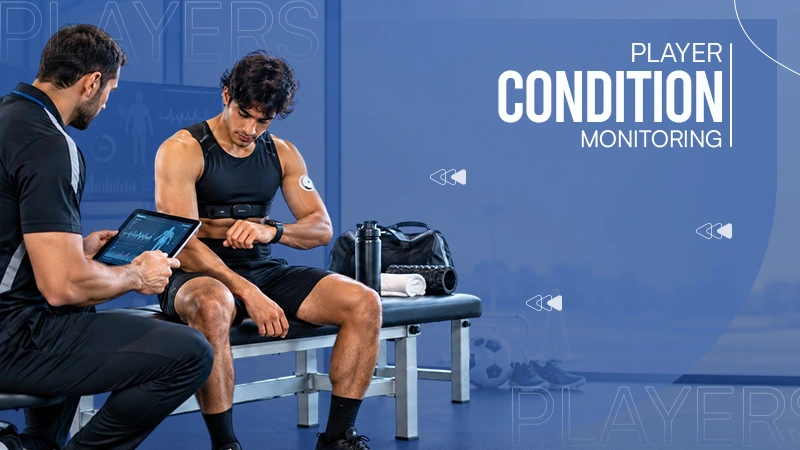
Apparent recovery after competition may mask an athlete’s actual condition. Coaches use recovery to determine the training level provided to an athlete. Signs of recovery may be more apparent before a performance decrement. These signs may include quantity or quality movement problems, muscle soreness associated with activity, insufficient sleep, high workloads, or increased heart rate. These signs are likely to be more pronounced in short recovery and high-intensity competitions, tournaments, or international events. Understanding this process explains why the majority of contemporary teams do not use appearance as a measure of an athlete’s fitness.
The time after the competition is not time off. During this time, the medical and performance teams assess how each player has responded to the recent activity. A player may say they feel fine, but this may not be the case, as they may show signs of reduced strength and movement and fatigue. This recovery information also gives sports betting fans more context when checking upcoming matches through the Melbet APK. Knowing a player’s recent workload and fitness can help bettors make more informed decisions instead of relying only on previous results. Instead of judging based on a single measurement, the performance and medical staff assess findings compared to the athletes’ baseline.
The checks also impact the response given to the athlete and the response given by the staff. If the athlete is fully recovered, they can progress to high-intensity running and strength work. If an athlete is not fully recovered, then the workload may be reduced and more recovery and treatment required. This individualization occurs as some teammates will participate in different elements such as training, travel, workload, and competition, which will result in different responses to recovery from competition.

An athlete’s physical condition cannot be captured by a single metric. Instead, a combination of objective testing and daily assessments is used, as fatigue can present itself in multiple ways. Some of the most valuable metrics include the following:
Using trends over multiple days can greatly improve the value of these metrics. An anomalous value may not be significant, but consistent trends can be used to justify interventions prior to competition.
Collecting data has limited value unless coaches can use it during planning. Performance staff therefore translate measurements into practical recommendations about training volume, intensity, recovery, and individual work. This information can also help sports betting fans assess player readiness when studying upcoming events on betting sites. Understanding workload and recovery can make betting decisions more informed before the next competition. They also consider the competition calendar because the same physical result can require different decisions at different stages.
The goal is not to keep every measurement perfect. Teams need players prepared for competition without adding unnecessary fatigue during the days between events. That balance becomes especially difficult when recovery windows are short.
GPS systems can provide data on the physical workload of training and competition. Total distance covered, high-speed running, sprinting, accelerations, and changes of direction can all be measured. Each of these activities puts stress on the body, but total distance covered does not provide a complete picture of the workload imposed. Position can also play a part, as a central defender will typically exhibit a different pattern of physical activity compared to a wide midfielder.
The level of recent activity can be compared to an individual’s previous workload patterns. If there is a significant increase in workload, the coach may decrease the amount of additional physical activity during subsequent sessions. Players with limited competition time are likely to cover additional distance in the recovery period as their competition workload was relatively low. For regular players, a recovery session may be provided before they can return to their normal level of physical activity.
Workload data can be especially useful during periods of high competition density. Even if the performance levels during three consecutive matches appear high, accumulated fatigue can occur. At this point, coaches can adjust the physical activity performed in training, reduce excessive mileage, or more carefully manage the amount of competition time given to players. The workload data can assist in these decisions, but coaches also use medical and player input in addition to this data.
Brief tests that can be conducted around travel, tactics, treatment and training are required by teams. Many recovery tests are therefore short (few minutes) and can be conducted repeatedly. Examples include:
Having individual baselines allows these tests to be most effective, as staff can then detect significant alterations rather than making comparisons to a single team-wide standard for all athletes. Test data can also be used to decide if an athlete should participate in normal or modified training or if further medical evaluation is required.

Different tools answer different questions about readiness. GPS explains external workload, while strength testing shows how the body performs after that work. Combining several methods gives staff a more complete picture:
| Monitoring method | What staff measure | How it can influence training |
| GPS tracking | Running distance, speed, accelerations | Adjusts upcoming running volume |
| Jump testing | Explosive force and movement output | Highlights possible neuromuscular fatigue |
| Wellness survey | Sleep, soreness, fatigue, stress | Adds the athlete’s daily recovery feedback |
| Strength testing | Force production and imbalances | Guides gym work and return progression |
The table also explains why one weak result rarely determines a player’s entire program. Coaches look for patterns across several measurements before making larger changes. Context remains essential because travel, recent injuries, playing time, and training history can all affect the numbers.
Two players may have the same results, but they might require different types of training. A jump score that is normal for the rest of the team may be a huge drop-off for one player. To avoid these problems, performance teams build individual baselines using data collected during training and while the player is healthy. The new data can then be compared to that player’s baseline.
This is more important for different positions, ages, and physical builds. Forwards, midfielders, defenders, and goalkeepers have different movement requirements. Older players may also require different training and recovery than their younger teammates who have similar training loads. Injury data allows coaches to have a different view of recovery for each player without having to recover everyone at the same pace.
With the travel competition schedule, recovery for the following training can start to be compromised. Long travel to new hotels, poor or altered food, disrupted sleep, and late arrival times can all combine to compromise recovery. For international football players, this can be a particular issue following a long and intensive club match. When assessing the player’s recovery, other factors beyond travel time and minutes of competition should be considered.
Short competition and training periods can limit the amount of recovery time available as well as the time available for normal recovery. Coaches can substitute one training session with preparation for the following session. During these periods, mobility, recovery, and some gym sessions can be prioritized in order to prevent fatigue. Useful training is the focus in order for the players to be at their best during the following session.
By monitoring physically, anomalies can be detected early, and appropriate action can be taken prior to a problem arising. Coaches are able to modify workloads, recovery protocols, or request further assessments when several parameters fall outside an athlete’s normal range. This enables athletes with improved recovery to progress more with less unnecessary restriction. Through this continual process, a team can be in a more prepared state to meet the demand as opposed to responding to a problem.


Email at: all4needyinfo@gmail.com