Online Game
New Energy is Shifting from “Power Generation” to “Revenue Generation”: Lake Energy’s Cash Flow… Read More 29 September, 2026

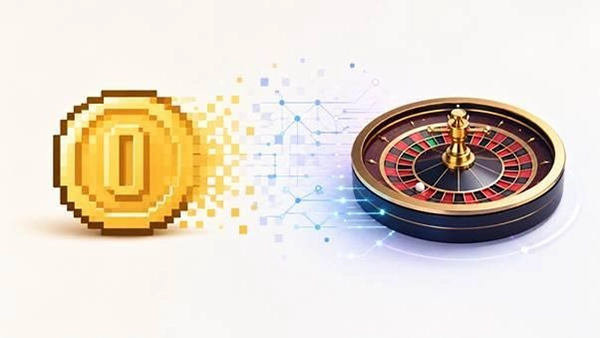
Retro gaming nostalgia, because of old games, makes digital value feel visible. A coin flash, sound effect, and changes in a few aspects of the gaming experience encourage players to keep exploring for more rewards.
Modern crypto gaming uses newer systems, but still benefits from the older visual language, as this digital value is understood better when it feels familiar. This familiarity is why retro design keeps making its way back in online play.
This article discusses Video Game Nostalgia and Retro Gaming, how old systems still influence newer mechanics, and what players should look for in the future.
Key Takeaways
- A game currency usually belonged to one title, one publisher, or one account, but bitcoin-supported play adds a wider digital rail around familiar formats
- Bitcoin lets our gaming worlds overlap in new and interesting ways
- A hidden item rewards curiosity, and a power-up changes what a character can do
- Older games taught players to accept digital objects as meaningful, but online worlds expanded that meaning through accounts, inventories, marketplaces, and shared communities
The real change has not been from “old games” to “new tech.” It has been the transition from closed digital symbols to connected digital systems. A Mario coin belonged to a single level. An arcade token belonged to one machine or venue.
A game currency usually belonged to one title, one publisher, or one account. Bitcoin-supported play adds a wider digital rail around familiar formats, which is why a classic game like roulette can now be presented in a crypto setting without becoming hard to understand.
A dedicated roulette collection lets readers play roulette with Bitcoin through recognizable digital and live dealer-style versions, including formats such as Mini Roulette, European Roulette, Lucky Roulette, and Mega Roulette.
The games available are all different titles, and may even have been developed by different companies, but as they can all be played with Bitcoin, they are all interconnected. If you win a prize in one, you can use the resulting Bitcoins to play any of the other titles on the site.
That’s a pretty significant difference from the way games used to work. You couldn’t spend those Mario coins to buy Poké Balls, after all, but now Bitcoin lets our gaming worlds overlap in new and interesting ways.
Retro games train players to understand value without much explanation. A line of coins suggests a path to players. A hidden item rewards curiosity, a power-up changes what a character can do. These cues worked in the past because they were visual, repeatable, and tied to the action.
That may seem obvious to modern gamers who expect there to be a hidden reward if they find a secret area, but in the early days of gaming, the design needed to be intuitive because it was trying to teach people who were coming to this world with very few expectations.
Crypto gaming has a similar communication problem to solve. Terms like wallet, token, chain, and digital ownership can sound technical and confusing when introduced to people for the first time. Place them beside objects players already understand, and the mental distance becomes smaller.
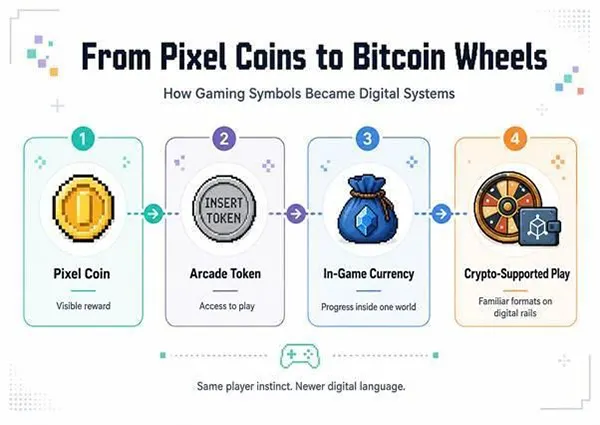
The strongest crypto gaming explanations avoid introducing too much information right at the beginning. They begin with things that players already comprehend.
It could be a pixel coin, a collectible skin, a rare item drop, or simply the satisfaction of seeing progress saved after a session. All of these act as an emotional and practical reference point, not just random decorative throwbacks.
This is also why retro aesthetics remain so effective. Pixel art, chiptune sound, cartridge references, and arcade-style rewards do more than trigger memory. They create a bridge between eras of play.
Older games taught players to accept digital objects as meaningful. Online worlds then expanded that meaning through accounts, inventories, marketplaces, cloud saves, and shared communities.
The next step is not simply “more crypto” in games. It is clearer language around what players are actually seeing. A wallet is not exciting by itself. A token is not meaningful without context.
A blockchain record needs a reason to matter to the player. When those ideas connect to recognizable play patterns, they become easier to understand without overexplaining the technology.
Fun Fact
Players often hold governance tokens that let them vote on crucial game updates and development choices, essentially making the game community-owned.
The most useful way to read crypto gaming is not as a sudden break from the past. It is better understood as another layer in the long story of digital value.
Players moved from arcade tokens to save files, then to online accounts, from there to persistent inventories, and now to systems that display ownership and verification that can be explained in newer ways.
For the average gaming individual, the main takeaway is simple: retro nostalgia does not simply indicate a style choice. It acts as a teaching tool. It helps explain why coins, tokens, collectibles, and digital assets still feel natural in modern play. The symbols changed shape, but the player’s instinct stayed familiar.
Ans: The major change has been the transition from closed digital symbols to connected digital systems, with bitcoin-supported play adding a wider digital rail around familiar formats.
Ans: Retro nostalgia indicates value that players are able to easily understand as they relate it to older games. This encourages them to explore more to attain certain rewards.
Ans: They made digital objects appear meaningful by expanding that meaning through accounts, inventories, marketplaces, cloud saves, and shared communities in online worlds.
Ans: Players moved from arcade tokens to save files, then to online accounts, from there to persistent inventories, and now to systems that display ownership and verification.
Email at: all4needyinfo@gmail.com