Esports
Why Registration in Sports Applications Is Becoming Easier for Users in Kuwait Read More 16 June, 2026

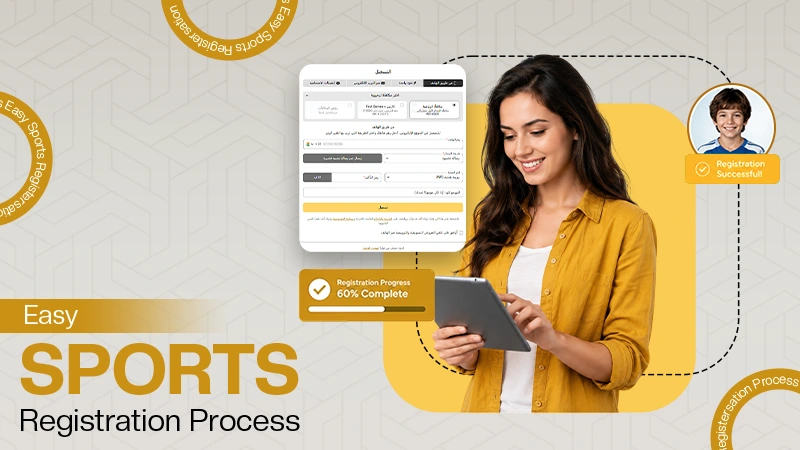
Historically, the primary cause of drop-off among sports applications’ registrations in Kuwait was that of registration itself. Lengthy multi-step processes, credit card information, verification of identities, and usage of unfamiliar payment options have been some of the key factors contributing to this problem.
Modern sports apps have solved all these problems. Today, you can إنشاء حساب Melbet on the official website to access many features and place bets. This article will examine four factors that made these changes possible.

Onboarding in 2026 does not happen only once as was the case in 2018. Onboarding is rather a hierarchical model with different processes handling different stages, making everything faster than in previous times. Normally, this hierarchy is made up of four main components, including authentication, verification, payment processing, and language assistance.
The SSO providers commonly accepted by sports applications operating in the Kuwaiti market include the following:
Once any of these has been made, the password manager on the device will manage future logins automatically. This leads to a time required for sign-up in between 10 and 30 seconds for most sports apps, compared to a few minutes required by a credential-based registration a few years back.
The second factor, identity verification, is now being adopted in the Middle East and North Africa region as the new phone-number-first model. In Kuwait, Zain, Ooredoo, and STC provide nearly complete coverage. They all include SMS one-time passwords in their standard services. Sports apps will use the mobile phone number as the main identifier, while the SMS one-time password verifies the identity.
As for the process, it is quite straightforward for applicants. The applicant simply inputs his Kuwaiti mobile phone number and receives a one-time code of six digits in just a few seconds and verifies it. The email address, in case there is one, will be considered an optional field only. The important thing about the mobile number is that it is used by other apps like WhatsApp, club tickets, and friend fantasy mini-leagues.
The third layer is where the biggest progress has been made in Kuwait in particular. An online payment in 2018 was usually defined by entering a number for your physical MasterCard or Visa card, along with the CVV and expiry manually in every new service. Present-day choices offered during registration often include:
Users typically don’t need to enter credit card information when registering for sports apps if Apple Pay and tokens are available. This step has been reduced from one to three minutes to simple biometric authentication. For example, you can Melbet تسجيل الدخول to your account and place bets in just a few seconds.
The fourth layer is language. In Kuwait, Arabic and English are used simultaneously as the working languages, while a significant portion of expatriates use other languages like Hindi, Urdu, Tagalog, and Bengali. Sports applications that are targeting the local market now assume that full support for right-to-left Arabic is a standard, and English is used as the fallback language.
During the process of registration, this means that labels, error messages, payment confirmation messages, and customer support processes are all done in the chosen language of the user. The error rate is lowered during the registration process since users know what each form requires. Data on completion rates on the operator side is not generally shared publicly, but the change is independent of the particular service.

The impact of all four levels works together to be seen in the following measurable data points: time to first use, manual field completions, and the percentage of people that have reached the paid level. The table below shows an example of how each mechanism works within a typical flow for a sports app.
| Mechanism | Function in sign-up | Where it appears in a sports app |
| Biometric authentication | Replaces password entry on repeat logins | All major streaming, fantasy and fitness apps |
| Apple ID / Google / Facebook SSO | Removes username-password creation at first use | beIN SPORTS CONNECT, fantasy apps, fitness platforms |
| SMS OTP | Verifies identity via Kuwaiti mobile number | Club apps, federation accounts, fantasy mini-leagues |
| Apple Pay / Google Pay | Eliminates manual card entry for subscriptions | TOD, Shahid, Apple App Store / Google Play billing |
These benefits, from the operators’ perspective, however, imply certain design limitations that are inherent to mobile financial and sports apps in general. First of all, KYC checks are postponed to the moment when users reach a higher amount of value instead of performing them during the sign-up process. This reduces the barrier to entering an app but places the task of verification further down the user funnel.
Access recovery may depend on the functionality of the underlying identity services, making access more restricted if the latter experience some problems. Another vulnerability arises from reusing passwords and sharing access credentials between different services, so a user whose one major account gets hacked may be in danger of leaking secondary access points too.
In the case of sports apps in Kuwait, the initial registration process is not an issue anymore, whereas management of multiple subscriptions, switchability, and overlapping paid services becomes the core problem.
All of the necessary infrastructure is ready and available: biometric authentication, SSO systems within the platform, local payments (KNET, WAMD), and support of two languages: Arabic and English. This allows new sports apps to utilize these features without inventing the wheel from scratch.
Email at: all4needyinfo@gmail.com