Internet
The New Social Ritual: Rethinking What We Drink Without Losing the Experience Read More 3 April, 2026

Have you ever noticed that some game characters are so legendary that you still remember them years later, while some are just till the time the game is on? This is because of the practical and psychological strategies used behind its creation. Just adding ultra realistic layers or faking stories can achieve it.
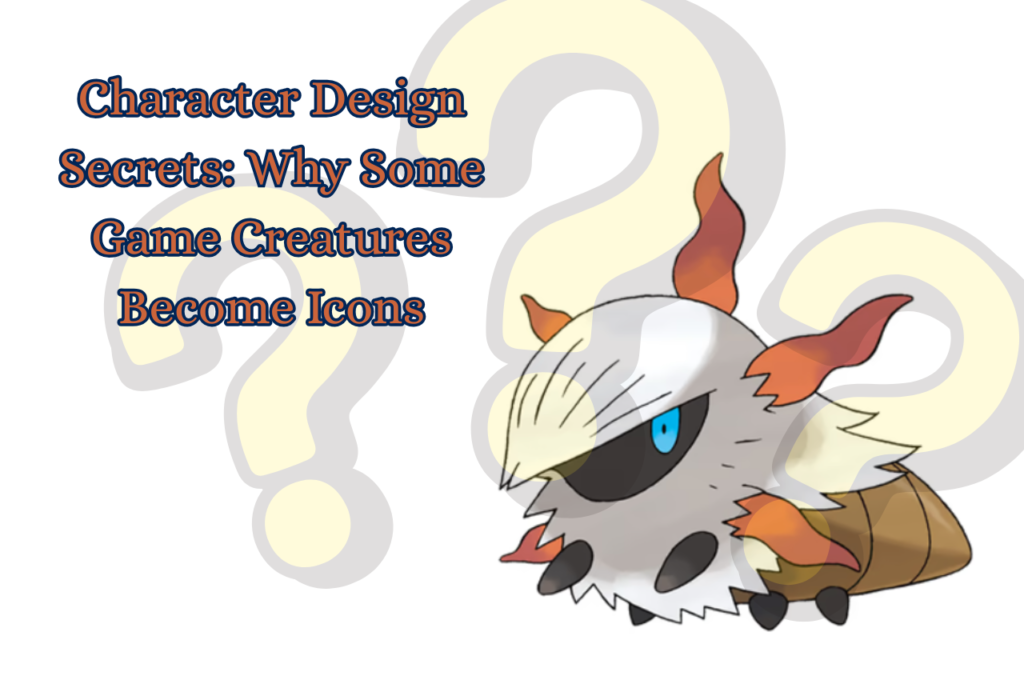
Iconic are the ones that feel right the moment you see them like Larvesta, Pikachu, Sonic, or the Slime from Dragon Quest. These creatures stay for long – as they connect with the emotions and almost subconsciously.
Excited to know the choices that make them iconic? Keep reading this article that shares secrets to blend psychological, simplicity and gameplay logic – turning game players into legendary icons.
At the core of iconic design lies human psychology. Players instinctively respond to characters that feel emotionally accessible. This does not mean “cute” in a simplistic sense, but rather relatable in form, behaviour, or symbolism.
Designers often rely on models: the hero, the partner, the impostor, the defender. These roles are deeply integrated in storytelling traditions – so when players find them in games, a remembering thought happens almost instantly. The creature might be fictional, but how emotion functions will be the same.
Equally important is consistency. A character that behaves as expected within its own logic becomes truthful. Over time, players form expectations and emotional routines around that presence. The creature stops being just a design and starts feeling like part of the experience itself.
One of the most surprising patterns in iconic characters is how visually simple they try to be. Extremely complex designs may look impressive, but they are harder to remember and less versatile across media.
Larvesta can be a good example of this – Its design combines a limited color palette, a clear silhouette, and symbolic elements (fire, growth, metamorphosis). Nothing feels accidental. Each visual choice reinforces the idea of potential and transformation, which aligns perfectly with its evolutionary role.
This is why many iconic characters work equally well as sprites, 3D models, or even merchandise.
Great character design is not just visual; it is mechanical. A creature becomes iconic when its design is reflected in how it behaves in gameplay.
For example, a fast-looking character that actually moves slowly creates cognitive dissonance. In contrast, when appearance and function align, players subconsciously perceive the character as “honest”. This honesty builds trust, and trust builds attachment.
Larvesta’s slow but powerful growth curve mirrors its thematic identity. Pikachu’s agility reflects its visual energy. The Slime’s harmless appearance matches its role as an initial enemy. These consistencies support the emotional logic of the world.

When these elements align, the character feels designed, not manufactured.
Around every players’ discovery journeys – something interesting happens: they stop relying purely on marketing and start trusting what their heart says. This is especially true when exploring new genres or franchises. In that context, it becomes natural to mention how an authentic website that offers fair reviews can help players identify games with thoughtful character design and meaningful mechanics rather than superficial newness.
What matters here is not the genre, but the principle: players value trusted filters. They want guidance that highlights craftsmanship, not hype. Over time, these organized spaces shape how players understand quality across all forms of digital entertainment.
Another defining factor in iconic status is narrative positioning. Creatures that exist without context rarely become memorable. Those inserted in meaningful stories, however, gain emotional depth even with minimal screen time.
Narrative does not need to be complex. Sometimes, a simple arc — growth, loss, protection, transformation — is enough. What matters is that the character represents something beyond itself.
Larvesta’s transformation into Volcarona is a perfect metaphor for patience and evolution. Players invest emotionally because the design promises a future. That promise creates hope, which is one of the strongest emotional drivers in interactive media.
Icons survive because they adapt. A well-designed individual can exist across generations, platforms, and audiences without losing its individuality.
This flexibility often comes from:
Characters like Mario, Pikachu, or the Slime have been revised countless times, yet their core identity remains untouched. This is not accidental – It is the result of a design that puts essence at first over detail.
Not every well-drawn character becomes iconic. Many fail because they lack one of the core pillars: emotional function, mechanical importance, or symbolic clarity.
Designs that rely too heavily on visual entanglement often struggle. Players may admire them, but they do not remember them. Others fail because they feel unconnected from gameplay or narrative, existing as decorative elements rather than meaningful participants.
In contrast, iconic characters usually feel inevitable — as if they could not exist in any other form.
What ultimately makes a game creature iconic is not any single feature, but unity. Visual design, mechanics, narrative role, and emotional symbolism must all support each other.
This is why iconic characters feel “alive” even when they are simple. They are not just assets; they are systems of meaning. Players project feelings onto them because the design invites that projection.
In the end, iconic status is not created through marketing or budget. It emerges when a character echoes so deeply with its world — and its players — that it becomes part of gaming culture itself. This lasting connection transforms a digital entity into a timeless legend. It proves that when art and function coordinate perfectly – a creature transcends its code to live forever in the collective human imagination.
Iconic game creatures are not the ones that try too hard to impress. They are the ones that stay memorable because they feel right. Their look matches how they play and their role connects to their given role – making sense in real life. Players connect with them easily without needing to know much about why.
Such a natural fit turns a simple design into something that’s hard to forget. When a character feels honest and meaningful – it stays in the mind of players long after the game ends.
No, it is not at all necessary – it more depends on its role and resemblance – not just appearance.
Narrative provides context – even a short turn or twist can turn a creature into a symbol.
Yes – adding too many details can change the meaning and make a character harder to remember.


Email at: all4needyinfo@gmail.com