Internet
Montreal Canadiens Rebuild Timeline: Prospects Who Could Define the Next Era Read More 24 March, 2026

Ever wondered why many businesses earn huge numbers by running small ads while some businesses are left with a little even after investing majorly in ads? The difference is because of lookalike audience strategies. It is a modern tactic that takes advantage of groups of people with similar characteristics.
The process starts with a careful selection of the seed audience. This is usually managed on a product or channel level, as it is believed that customer profiles differ a lot and vary between channels. And hence, results are efficient even with limited resources for ads.
Want to know how? Keep reading this article that shares why lookalike audiences reduce ad waste – the reason behind it, associated factors and things to actually measure.
Most targeting still works the same way it did ten years ago. Pick an age range, pick some interests, maybe add income level if you’re feeling fancy. Launch the campaign and see what happens.
The issue is that interest-based targeting picks up a lot of noise. Someone who liked a CrossFit video in 2019 gets lumped in with someone who goes to the gym five days a week. Facebook doesn’t really know the difference, and honestly, how would it?
So you end up paying $8 or $12 or whatever your CPM is to reach people who scroll right past. The dashboard shows impressions going up. Actual purchases? Not so much.
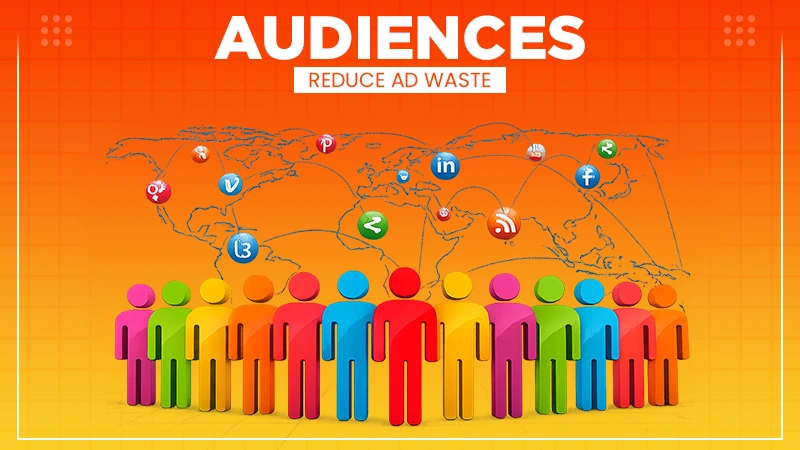
The idea behind lookalikes is pretty simple. Take your existing customers, let the platform figure out what they have in common, then find more people who fit that pattern.
It works better than demographics because it focuses on behavior. What sites do your customers visit? What do they buy? How do they interact with content? Platforms like Audience Builder at GoAudience.com let you build these audiences without needing to understand the technical side. Upload a customer list, and the system handles the pattern matching.
The reason this cuts waste is straightforward: someone who acts like your customers is more likely to become one. Age and location matter less than whether they exhibit similar browsing and buying patterns.
Research out of MIT found that behavioral targeting approaches reduce acquisition costs somewhere between 25% and 50%. That range is wide, but even the low end is significant.
Here’s a rough example. Say you spend $10k monthly with a 2% conversion rate on standard targeting. That’s 200 sales at $50 each. Bump conversion to 3.2% with lookalikes (not unrealistic), and you’re at 320 sales. Same spend, 120 extra customers.
Over twelve months, that gap adds up to real money.
This is where a lot of campaigns go wrong. Marketers dump their entire customer database into the lookalike builder and wonder why results are mediocre.
The problem is that not all customers are equal. Someone who bought once during a 70% off sale and never came back teaches the algorithm different patterns than a repeat buyer with high lifetime value. Harvard Business Review has covered this extensively: the top slice of your customer base typically drives most of your profit.
Build your seed from that top slice. Or create multiple lookalikes from different segments and test them against each other. The extra setup time usually pays off.
Meta’s algorithm weights social signals heavily. Google cares more about search behavior. LinkedIn looks at job titles and company data.
A B2B software company might see great results on LinkedIn and mediocre ones on Meta. Consumer brands often find the opposite. There’s no universal answer here; you have to test.
One thing that does seem consistent: smaller lookalike percentages (1-2% of a population) tend to convert better but limit your reach. Expanding to 5% or 10% gives you more volume with slightly lower precision.
iOS 14.5 caused a lot of panic, and fair enough. Losing access to tracking data hurt plenty of campaigns.
But lookalikes mostly survived because they run on first-party data. Your customer list, your purchase records, your email subscribers. That information belongs to you, and the W3C’s privacy initiatives pushing browsers away from third-party tracking actually make that owned data more valuable.
Companies that built real customer relationships before the privacy crackdown are doing fine. The ones who relied completely on pixel tracking had a harder adjustment.
Click-through rate is a vanity metric for this stuff. Track ROAS between your lookalike campaigns and your broader targeting instead. Run them during the same period with similar budgets so the comparison is clean.
Also watch what happens after the first purchase. If lookalike-acquired customers churn faster than others, your seed audience probably needs work.
With every aspect of marketing and advertising – the quality of your audience matters. And this quality of lookalike audience depends more on how accurate and descriptive the data is that informs the seed audience. This is what mainly decides the efficiency of the results.
Simultaneously, there is no associated waste in measures. As the targeting algorithms keep improving – the gap between this approach and old-school demographic targeting keeps widening.


Email at: all4needyinfo@gmail.com