Esports
The Role of Team Captains in Club Success Read More 26 March, 2026


The position of a captain is the most visible and important leadership role of the soccer club on the pitch. The captain represents the whole club and team when dealing with officials during matches.
Moreover, this role comes with the added responsibility for the performance of the squad. In many cases, especially in countries such as Iran and Afghanistan, the captain provides much-needed direction and stability for their teammates.
This article analyses the influence and impact of a leader of a soccer club and how it translates to the overall performance of a team
Key Takeaways
- A captain plays many roles in a team’s composition, bridging the gap between players and coaches
- The leader of a team is tasked with creating tactical strategies to enhance the teamwork and success of a club
- Experienced leaders always bring a positive psychological impact on the overall performance of a team
- The role of modern captains has transformed, with them being given additional responsibilities
The number of professional teams has evolved to include leaders at various stages of development, extending beyond simply coaching and managing.
A Captain is one of the many roles that can assist in bridging the gap between the player, the coach, and the officials and transform strategy into action on the playing surface.
The proper analysis of a team and the game is done by studying valuable insights and crunching numbers.
Many sports betting football websites (Arabic: شرط بندی) provide users the opportunity to track the game in real-time and study the match’s statistics. These sites also assist users in capitalising on changing odds live, where all updates of a game are shown to participants, including statistical data.
In competitive matches, team captains are expected to exhibit several key leadership skills:
The duties listed above represent the reason why clubs often choose veterans who are familiar with both the tactics of the team and the mental aspects of professional competition to be the team captain. In addition, many professional leagues require their team captains to act as the principal representative of the team when communicating with referees.
Emotional regulation and high trustworthiness are critical for this role, as match referees usually address the team captain when seeking clarification on disputes or stoppage calls.
This kind of engagement over the entire season helps reduce grievances and fosters a more respectful and competitive climate on the field.
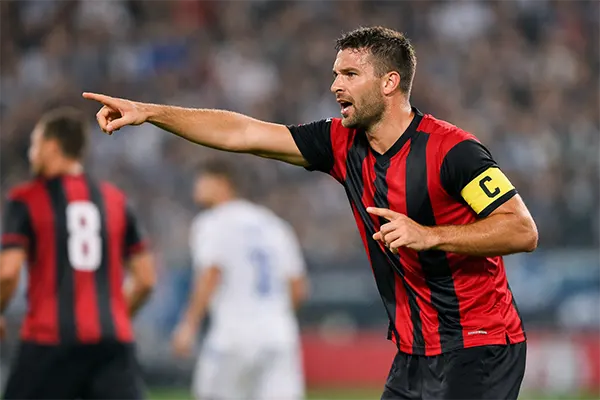
A captain is an important element in organising a team on the pitch. The captain will help keep their teammates in order.
A coach’s responsibility is to focus on the overall tactics of the team, but they should provide additional details to the players about how to space themselves, communicate, and react when there is a deviation from the team’s original plan.
These leadership decisions have a significant effect on the team’s strategy of play, while defending, pressing or transitioning to a counterattack.
Social media sites are increasingly used by regional football communities to post and share statistics and data related to match analysis.
MelBet Facebook Iran is a social media site where users can find match reports, starting lineups, and analysis in relation to Persian-language sports coverage.
Many comments on these posts are by players who include their own predictions for future matches, representing betting lines. This proves that many users analyse matches before placing a bet.
Many well-known captains demonstrate the extent to which effective team leadership contributes to the success of the team.
For example, Sergio Ramos of Real Madrid was known as one of the most prominent defensive organisers in Europe; he played for Real Madrid from 2005 through 2017, and his teams won the UEFA Champions League four consecutive times.
Ramos clearly demonstrated to the world how a defensive leader can bring cohesion to his team’s defence. As the lead communicator in the field, Jordan Henderson of Liverpool proved to be instrumental by leading his team to the Premier League Title in the 2019-20 season.
He also provided a strong presence in helping to organise his team’s defensive and midfield units.
During the period from 2008 to 2012, the Spanish and European football landscape was dominated by FC Barcelona under the guidance of manager Pep Guardiola.
During that time, Barca won multiple La Liga titles as well as two UEFA Champions League titles. Barca’s captain, Carles Puyol, was widely recognised as one of the greatest defenders of all time.
In addition to providing valuable leadership skills on the field, Puyol was also able to structure a strong defensive framework based on disciplined positioning during high-pressure scenarios.
Fun Fact
While captains lead the team, their only official “legal” duty listed in the rules of the game is to take part in the coin toss before the start of a game, to choose sides or to kick off.
A captain’s influence extends beyond mere tactical organisation. Psychological stability within the squad often relies on leaders’ keeping the group focused during tough periods of the season.
The International Journal of Sports Science & Coaching states that the greater the team’s influential leaders, the greater the team’s resilience regarding goals conceded or loss of possession.
Captains frequently guide team morale through several mechanisms:
These duties tend to be most salient in leagues where teams blend seasoned veterans with developing young players.
Promising young talent first entering senior levels of competition often rely on captain-led support to help them fully grasp their positional responsibilities, training demands and intra-match communication hierarchies.
Across numerous leagues in Europe and Asia, coaching staff often praise the value of the so-called ‘leadership group’ behind the captain, who plays a pivotal role in upholding a certain standard during training and travel.
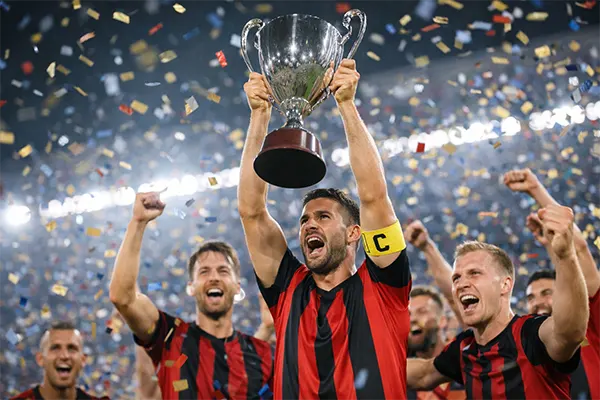
Sports analysts make an effort to assess the qualitative effect of leadership by means of performance statistics and metrics. Because of this, the statistical indicators demonstrate how the team’s captains can affect the stability of the team.
| Indicator | Impact on Team Performance |
| Defensive organization | Fewer positional errors and improved coordination |
| Communication frequency | Faster tactical adjustments during matches |
| Team discipline | Reduced the number of yellow and red cards |
| Experience in key matches | Higher consistency during decisive fixtures |
European sports analysts note that teams with consistent leadership groups are able to sustain solid defensive systems over extended periods of time due to their ability to maintain strong communication and cohesion among defenders and midfielders.
An experienced team captain with a long-tenure under his belt generally indicates a cohesive unit, as it demonstrates a consistent flow of communication during critical moments of a game.
Additionally, leadership is important for sustaining player performance when managers leave or change teams.
The evolution of professional football has caused the team captain’s role to develop, too. Previously, the majority of the responsibility of a team captain was just to be the official face of the organisation.
But today’s captains are more than just official representatives of the team. They are now a key member of the team’s strategy. Captains help define the structure of communication on the field. They define how the team trains.
They help develop the culture of the team. Several structural changes will provide evidence to support the evolution of the role of the captain.
The use of data-driven coaching, along with the increasing inclusion of performance reporting analysts and the increasing use of data by coaches and analysts, creates a situation that requires captains to interpret the coach’s tactical instruction into data and report back to the coach and analysts.
Additionally, playing squads are often made up of players from various countries and cultures. Therefore, the captain must act as a liaison and lead communicator to ensure that the entire group remains on the same page while working together in the locker room and on the field.
Due to the length of many leagues (both domestically and internationally), and the constant need for attention and concentration over long periods of time, all players (especially the captains) have to stay engaged and focused during extended periods of time.
The captain must remain engaged and focused longer than any other player due to their reliance upon them to keep every other player engaged and focused.
Furthermore, the increased amount of media coverage experienced by today’s captains as a result of their new duties as team representatives, public speakers, and interviewees has dramatically altered the role of the captain from what it once was.
Ans: The captain of a team is responsible for making decisions related to playing strategies and leads the team by enhancing communication and teamwork between each other.
Ans: A captain represents the face of the club and translates the organisation’s goals and targets into actionable performances by collaborating efficiently with his team. This is why having a captain is extremely vital.
Ans: Yes, an experienced leader knows how to navigate through tough situations as he has faced them before and found a solution to deal with them effectively, something a novice player will have difficulty dealing with.
Ans: Earlier, captains were just treated as the face of a club, but now team captains have become leaders of the squad, promoting teamwork, resilience and grit in their team play to ensure success.

Email at: all4needyinfo@gmail.com