Online Game
How to Choose the Right Online Casino for Blackjack Read More 9 April, 2026

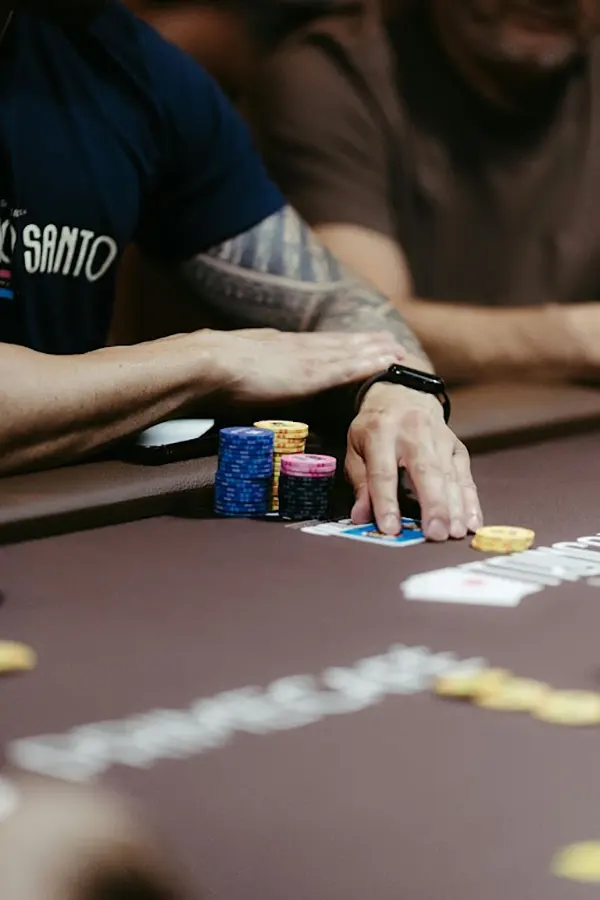
The poker game has entirely changed with the advent of solvers. These tools suggest the best GTO (game theory optimized) strategies for any situation. People are getting trained by these to follow prescribed bet sizes, frequencies, and range constructions with precision.
Solvers have become so popular that everyone assumes that the other side is also a GTO-bot. However, what happens if you face a solver-trained player but don’t follow any GTO strategy? That makes you entirely unpredictable.
Your opponent won’t be able to adjust as they can’t help but execute a fixed strategy, and that creates openings you can attack. Many a time, they even overdo a winning tactic. Many solver-trained players often c-bet 60-70% in actual scenarios, whereas the theoretical optimum, as per GTO, is only 35% (Source).
But being humans, even they can’t execute a perfect GTO strategy. The most they can do is 80-90% of perfect. So the solver-heavy players only remember common spots, standard bet sizes, and default frequencies. They apply these tactics assuming they would work even if the strongest of players is sitting in front. This predictability of their game strategy makes them vulnerable.
In this guide, I’ll explain how you can defeat the so-called undefeatable solver-trained poker players. And this doesn’t even require you to do an undergrad course on GTO strategies.
KEY TAKEAWAYS
- Poker solvers suggest the best strategies to win in any situation.
- Many people train themselves through these tools, which are based on GTO strategies.
- They assume you to be a strong GTO player, so act unpredictably to win.
You can easily spot these GTO-bots as they exhibit a particular behavior while playing poker. They use standardized bet sizes repeatedly: 33% pot on certain board textures, 75% on others, and overbets in particular spots.
Their timing tends to remain consistent because they rely on pattern recognition rather than real-time analysis of your tendencies.
Watch for players who rarely adjust their aggression based on your actions. If you have folded to 3-bets at a 70% rate and they continue 3-betting you at the same frequency, they are not paying attention to you. They are running their default program.
A player using PIOSolver to study might understand node-locking concepts that reveal optimal counter-strategies, but at the table, many of these players fail to recognize when such adjustments apply.
Use GGPoker’s PokerCraft to record every hand played on the network. This works automatically. The Opponents tab displays net earnings against specific players from selected sessions. This helps you spot their patterns and tendencies over time.
A player who folds to your river bets at an unusually high rate becomes a target for wider bluffing ranges. This type of pattern recognition forms the backbone of effective online poker tips and separates recreational players from those who consistently adjust to their opponents.
Solver-heavy players often ignore these tracking features because they trust their memorized ranges. That creates an opening when you notice bet-sizing tells or timing patterns they have not corrected.
Solver outputs rest on assumptions that even you’re a GTO bot. He/she executes the best response to your solver-optimized call. But when you intentionally deviate from optimal play in specific directions, solver-trained opponents fail to evaluate you correctly.
Consider a spot where solvers recommend a mixed strategy between checking and betting. If your opponent always bets when they should mix, you know their strategy is designed to hide. Their range becomes easier to read because the solver intended to conceal their holdings.
Increase your bluff frequency against opponents who fold at high rates in specific spots. Breakeven math tells you how frequently a bluff needs to work. If your half-pot river bet requires 33% folds to break even and this opponent folds 50% of the time, you profit by bluffing wider than any solver would. The solver assumes optimal defense. Your opponent provides something less.
FUN STRATEGY
If you know a solver player is “over-folding” to 3-bets, you can 3-bet them with any two cards for an instant, high-profit exploit.
GTO Wizard recently introduced Player Profiles that allow model opponents to have leaky play. This tool allows players to study counter-strategies against calling stations, maniacs, or players who fold too frequently. The research behind this feature confirms what observant players already know: real opponents seldom play equilibrium.
Solver-trained players often develop sizing tells they do not notice. They learned that 33% bets work well for certain hands on certain textures, so they apply that sizing with their entire range in those spots. But humans struggle to randomize.
Some players develop patterns where they use larger sizes with value hands and smaller sizes with bluffs. Others reverse this tendency. Once you identify the pattern, you can fold or call with confidence; their strategy never expected you to do it.
Overbet straightaway signals that you either have strong hands or you’re just bluffing. However, solver players overbet less frequently than theory suggests, and when they do, they tend to lean heavily toward value. If you notice an opponent rarely overbets on the river and then suddenly shoves, they likely hold a strong hand. Theory says they should bluff sporadically. Humans often do not follow through.
Another unusual strategy for solvers to handle is small pots. These GTO bots are mainly trained to defeat strong players, hence the big pots. But if you intentionally keep the pot small, they don’t know what to do.
You can accomplish this by flatting more hands preflop than you might normally 3-bet. You sacrifice some expected value from premium hands but gain an edge in postflop situations where your opponent’s training applies less directly.
GTO-bots are not actually bots; they’re just heavily robotic players with emotions. So, tilt damages them equally as it does to any other poker player. Their edge comes from discipline, and frustration erodes discipline. When a solver-focused player runs badly, they sometimes abandon their framework and play too loosely or too passively. Watch for sudden deviations from their usual patterns after bad beats.
Solver-trained players have gamed the poker, so the counterstrategy has to be no strategy, completely unpredictable. Solver-heavy opponents prepare extensively for equilibrium scenarios. Their reliance on memorized patterns creates predictability, and predictability creates opportunity.
By paying attention to bet sizing, timing, emotional shifts, and repeated tendencies, you can capitalize on the gap between theory and execution. Solvers trained them to play against perfection. You are not perfect—and that is precisely why you can exploit them.
Yes. Almost every serious player uses a solver.
In poker, exploiting means figuring out your opponent’s strategy and targeting that strategy’s weaknesses to win.
Solver-heavy opponents follow a rigid and balanced strategy; exploit that by playing unpredictably.
Email at: all4needyinfo@gmail.com