
Guide
Seo Instant Appear Highsoftware99.com: Complete Guide (2026) Read More 19 March, 2026


Ever thought how the online casino games you play know everything about you, from games you like and levels you enjoy, to even tournaments that would attract your attention?
Well, Online Casinos have set the bar for the gaming experience too high. And, the reason behind this is the data analytics performed by their teams to improve the gaming experience of every individual.
So, if gaming is what entices you, read this article to know how your data becomes the path to a better gaming experience and more!
Key Takeaways
- Data that can be controlled by operators, such as games played, time duration, bet amounts, etc.
- Analysing how online casinos utilise your information for activities such as recommendations
- Adding personal effects to your gaming experience– something that offline experience can never match
- Ensuring players’ satisfaction by maintaining a transparent network between the casino and the player
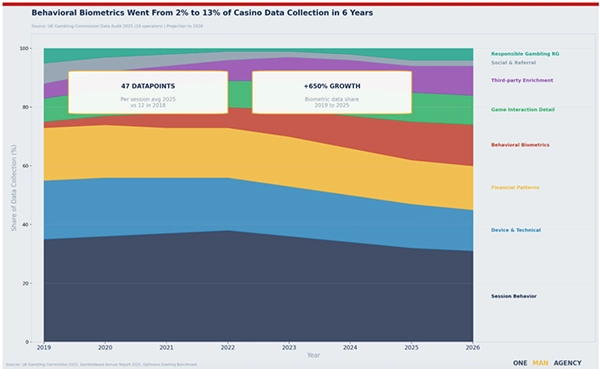
In 2018, the UK Gambling Commission checked 19 licensed operators and found that the average session produced 12 data points per player. They ran the same check in 2025. The number was 47.
Not 47 total. 47 per sessione.
The obvious ones are there: what games you played, how long you stayed, how much you bet.
But the list goes further. It includes the device you used, the time of day, how long you took to click confirm on a deposit, and whether you opened the bonus terms page or skipped past it.
Nine of those 19 platforms bought third-party financial stress scores and added them to player profiles.
These scores come from credit data and spending patterns that have nothing to do with the casino.
This isn’t hidden. It’s in the terms and conditions. Most people don’t read them.
The basic use is recommendations. You play slots on mobile in the evenings, and the platform shows you more slots on mobile in the evenings.
That part is simple, and most players don’t mind it.
The more interesting use is timing. Platforms figure out when you are most likely to make a deposit and send the offer at that moment. Not on a schedule.
Not randomly. At the exact moment, the model says you’re most likely to say yes. Optimove tested this across 22 operators: first-deposit conversion hit 61.4% on the personal version against 45.7% on the same-offer-for-everyone version.
Thirty-day retention was 51% higher on the personal side.
Good numbers for operators. Possibly good for players too, if the offer is for something they actually want.
The problem is that the model doesn’t know if you’re in a good place to spend money. It just knows when you’re likely to click.
One operator we spoke to at the start of 2025 was running more than 600 active player segments at the same time. Not 600 players. 600 different groups, each getting a different version of the product.
The Wincraft official site shows how this works in a licensed market. When you log in, the platform builds the lobby around your history.
The games at the top are the ones it thinks you’ll play. The platform times the offers. The whole thing is personal in a way that a physical casino can’t match.
This is mostly useful. A player who only plays live casino doesn’t want to scroll past 200 slots to find the blackjack table. Cutting that down is a real improvement.
It also helps with responsible gambling, which is the part that doesn’t get talked about enough.
GambleAware published data in 2025: 74% of players they later flagged as high-risk had already changed how they played, on average, 14 days before they told anyone about a problem.
The data was there the whole time. The question was whether operators were reading it.
Kindred built a system called Playscan that reads it live. Between 2022 and 2024, their recorded harmful incidents dropped by 31%. Not every operator has built something like it. But the data to do so sits in every platform already.
The keystroke model is at one end of the scale. Nobody told players it existed. It wasn’t in any public documentation. It just ran in the background.
The financial stress scores are more common. Nine of 19 platforms in the UK audit used them.
A player who recently missed a payment might get a bigger bonus offer. Or they might get an aggressive offer at a moment when spending more money is a bad idea for them. The model isn’t trying to cause harm.
It’s trying to get a deposit. Those two things point in different directions sometimes.
The UK Gambling Commission has started asking questions about this. As of early 2026, there are no specific rules against it yet. The conversation is happening, though.
The 600-segment operator is worth thinking about, too. At that level of detail, the platform knows things about player groups that the players don’t know about themselves.
Which group are you in? You can’t ask. There’s no way to find out. That gap between what the platform knows and what you know gets wider every year.
Under UK and EU rules, players have the right to ask for their data. Most operators send a file within 30 days. It’s usually large and hard to read, but the information is there.
The more practical thing is the tools that come with most licensed accounts now. Deposit limits, session time limits, and reality checks that pop up after a set amount of time.
These existed before personalization got this detailed. Now, the better operators use the same data to make them work better.
If the platform can detect when you’re most likely to deposit, it can also detect when a reality check would actually make you stop and think.
Same data. Same model. Used the other way.
In a nutshell, online casinos have contributed to improving the traditional casino experience.
And especially with elements such as personalization of every experience with data analytics.
With a transparent and customer-centric approach, it has even enhanced customer engagement, setting new trends for online gaming.
Data analytics helps in providing tailored solutions to customers’ queries, improving the customer experience, which then contributes to greater customer satisfaction and interaction as well.
Online casinos rely on complex algorithms that include spin, roll, or are independently biased. The main cause behind this is that they use the RNG (Random Number Generators) to carry out these.
The verification by online casinos is done through looking at official IDs, such as a driver’s license or passport, to reassure the person’s identity.
Online casinos can track your location simply by asking you to enable the location tracker. This was a prevalent practise even amongst the first online casinos.


Email at: all4needyinfo@gmail.com